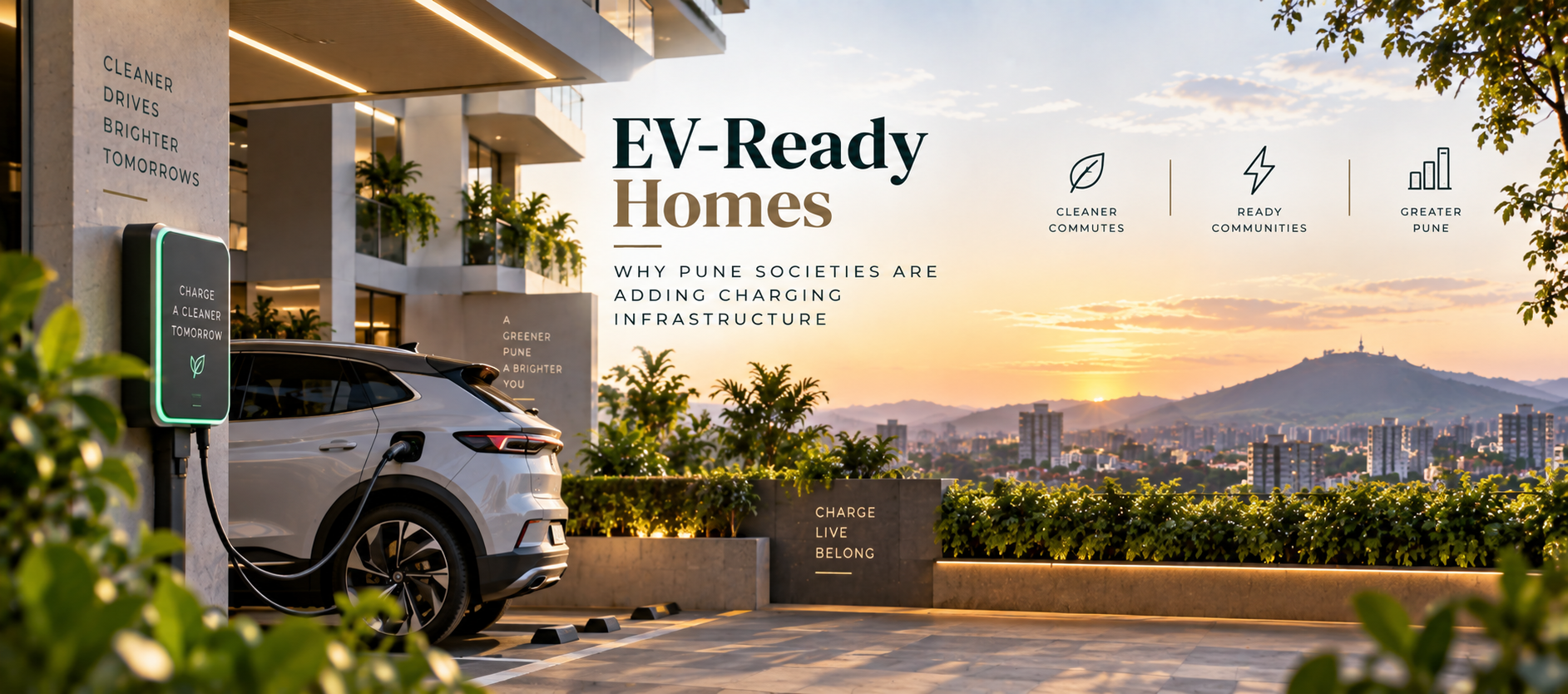
A decade ago, "EV charging point" wasn't a phrase homebuyers thought to ask about. Today, as electric vehicle adoption climbs steadily across Indian cities, it's becoming a genuinely relevant consideration — one that forward-looking developers in Pune are beginning to address proactively, rather than treating as an afterthought.
Why EV Charging Infrastructure Matters Now
Electric vehicle sales in India, including in Pune, have grown substantially in recent years, driven by a combination of rising fuel costs, government incentives for EV adoption, growing environmental awareness, and an expanding range of EV models across price segments — no longer limited to premium options. As EV ownership becomes more mainstream rather than a niche choice, the practical question of where and how to charge a vehicle at home has moved from a minor consideration to a genuinely important one for many buyers.
What "EV-Ready" Actually Means
The term gets used loosely, so it's worth understanding what it should genuinely involve:
Dedicated charging points in parking areas. At minimum, this means designated parking spots equipped with electrical points suitable for EV charging — not simply a standard power outlet that happens to be near a parking spot, but wiring and infrastructure specifically designed for the higher, sustained electrical load an EV charger requires.
Adequate electrical capacity planning. A building genuinely designed to be EV-ready accounts for the cumulative electrical load if a meaningful percentage of residents eventually charge EVs simultaneously — this requires forward planning in the building's overall electrical infrastructure, not just individual charging points added without considering total capacity.
Metering and billing clarity. A well-designed EV charging setup includes clear metering, so residents are billed accurately for their own charging consumption rather than costs being absorbed vaguely into common area electricity charges — an issue that can create genuine disputes in societies without clear systems in place.
Safety compliance. EV charging infrastructure should comply with relevant electrical safety codes and fire safety considerations specific to battery charging in enclosed or semi-enclosed parking structures.
What to Ask When Evaluating a Property
If EV ownership is part of your current plans or a reasonably likely future scenario, ask developers or existing societies specifically:
- Are dedicated EV charging points currently installed, or is the building's electrical infrastructure at least designed to support future installation without major retrofitting?
- How many charging points exist relative to the number of parking spots and units in the building — is this proportionate to reasonably expected future EV adoption among residents?
- How is charging metered and billed — individually, or absorbed into common charges?
- What's the process for a resident who wants to install a personal charging point in an existing building without dedicated EV infrastructure — does the society have a clear policy, or is this handled on an ad hoc, potentially contentious basis?
The Retrofit Challenge in Older Buildings
For buyers considering resale flats in older buildings without EV infrastructure, it's worth understanding that retrofitting EV charging capability afterward can be more complex and costly than incorporating it during original construction — involving electrical capacity assessments, potential society approval processes, and sometimes limitations based on the building's existing electrical infrastructure. This is a genuine, practical consideration if EV ownership is likely in your near-to-medium-term future, even if it's not an immediate priority.
How This Affects New Development Planning
Forward-thinking developers are increasingly incorporating EV readiness into new project planning from the outset — allocating adequate electrical capacity, designating specific parking zones for future charging infrastructure, and in some cases, installing basic charging points as a standard rather than optional amenity. This proactive approach avoids the costlier, more disruptive retrofit challenges that older buildings without this planning will eventually face as EV adoption continues to grow among their resident base.
Beyond Individual Convenience: A Broader Sustainability Signal
EV charging infrastructure, alongside other genuinely sustainable building features covered in more depth elsewhere, is increasingly becoming one signal — among several — of a developer's broader commitment to forward-looking, sustainable construction practices, rather than building purely to minimum current-day standards without consideration for how resident needs and technology will evolve over a building's decades-long lifespan.
Is This a Priority for Every Buyer?
Not necessarily — if you have no current or foreseeable interest in EV ownership, this shouldn't override more immediately relevant factors like location, developer credibility, and layout quality. But for buyers who already own an EV, are considering one in the near future, or simply want to make a forward-looking choice that anticipates where vehicle ownership trends are clearly heading, it's a genuinely worthwhile question to add to your property evaluation checklist — one that costs nothing to ask, but can save considerable future hassle if the answer turns out to matter to you.
The Bottom Line
EV charging infrastructure has moved from a non-issue to a genuinely relevant consideration for Pune homebuyers, tracking the broader national shift toward electric vehicle adoption. Whether or not it's a decisive factor in your specific decision, it's worth understanding what "EV-ready" should actually mean, and asking pointed questions rather than accepting the term at face value when it appears in a project's marketing material.