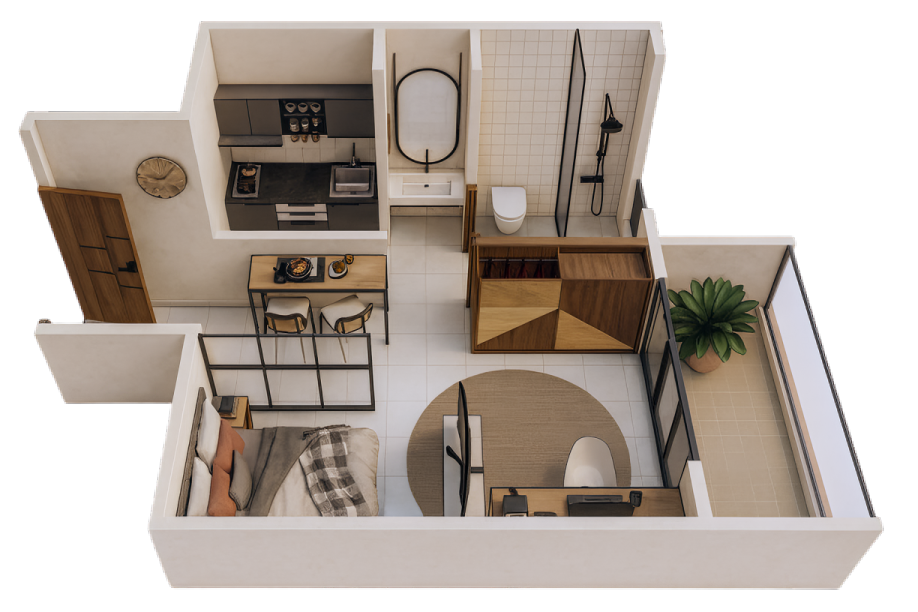
If you live in an older housing society in Pune, chances are "redevelopment" has come up at a society meeting at some point — usually followed by a dozen questions nobody has clear answers to. What does it actually mean? Who pays for what? What happens to residents during construction?
This article breaks down redevelopment in plain terms, based on how the process actually works with an experienced redevelopment builder.
What Is Redevelopment?
Redevelopment is the process of reconstructing an aging residential or commercial building into a modern structure — with better safety, updated infrastructure, and improved amenities — without the society losing its original location. Instead of members having to relocate to a new part of the city, the same plot gets a new and betteridentity more even benefiting the residing members of the society.
Why Societies Choose Redevelopment ?
For most societies, the decision comes down to a few clear benefits:
- Stronger, safer structures — modern construction standards mean better structural integrity and earthquake resistance, especially important for buildings over 25-30 years old
- Bigger homes — members typically receive additional carpet area, often 25-35% more than their existing flat
- Modern amenities — dedicated parking, elevators, security systems, and recreational spaces that older buildings simply weren't built with
- Zero financial burden on members — the developer bears the entire construction cost
- Higher property value — a redeveloped building in an established location often sees a significant jump in market value
How the Process Actually Works :
A structured redevelopment journey typically moves through these stages:
- Initial consultation — understanding what the society expects and needs
- Feasibility study — a legal, technical, and financial evaluation of the property
- Proposal & planning — a transparent redevelopment proposal and design concept
- Society agreement — documentation and approvals signed off by members
- Temporary accommodation — the developer arranges rent or alternate housing during construction
- Construction phase — quality-driven building work with regular updates to the society
- Handover — new homes delivered with modern amenities and an improved lifestyle
What to Look for in a Redevelopment Builder :
Not every builder is equipped to manage a redevelopment project well — it takes more than construction expertise. Societies should look for:
- A track record of completed redevelopment projects, not just fresh construction
- Transparent, documented agreements (Development Agreement, Corpus Fund terms, Bank Guarantee)
- Strong financial backing to guarantee project completion
- A community-first approach that keeps relationships intact through a long process
Giridhar Housing has been part of Pune's real estate landscape for over 30 years, and redevelopment has become a growing part of that work — including the biggest active redevelopment project underway in Bibwewadi. The approach stays the same across every project: transparent agreements, regular communication with society members, and a construction process that doesn't cut corners